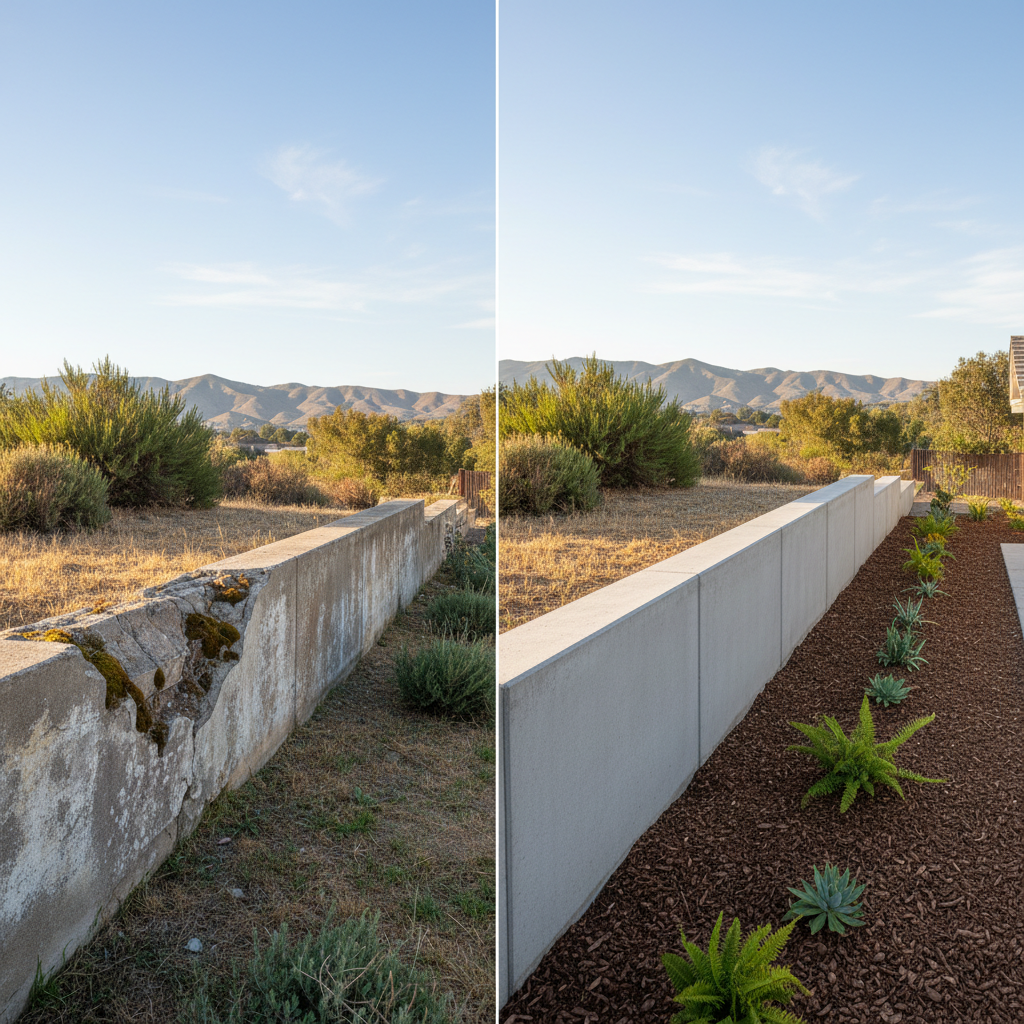
Alright, so you're thinking about putting in a retaining wall here in Ventura. Maybe your yard has a slope, or you're fighting off some erosion, or hey, you just want a more usable, level spot. Good call, by the way. Retaining walls are super important for managing grade changes and keeping your property safe. But when it comes to concrete, you've really got two main choices: concrete block (sometimes called segmental retaining walls) or poured-in-place concrete. So, which one makes sense for you?
Concrete Block Retaining Walls: The Good & The Bad
Let's kick things off with concrete block walls. You see these everywhere, right? They're made up of these individual, interlocking concrete units that just stack up to form the wall. Think of them like super-heavy LEGOs for your backyard.
The Upsides:
- Looks: They come in a ton of different styles, colors, and textures. You can get them to look like natural stone, or maybe something more modern and clean. Lots of design freedom there.
- Installation: Generally, these go in quicker than poured concrete, especially for smaller, less critical walls. No forms to build, no waiting for concrete to cure before you can backfill.
- Drainage: The little gaps between the blocks can actually help with drainage. That's a big deal here, what with our occasional heavy rains and how saturated our hillsides can get.
- Cost (Sometimes): For shorter, decorative walls, they can sometimes be easier on the wallet upfront.
The Downsides:
- Strength & Height Limits: This is a big one, folks. Block walls are awesome for decorative landscaping or holding back smaller slopes, usually up to maybe 4-6 feet. Try to go much higher, or if you're holding back something really heavy (like a driveway or a house foundation), and they start to get dicey. They mainly rely on their own weight and careful compaction behind them.
- Durability Over Time: Sure, they're durable, but those individual blocks can shift or settle after many years, especially if the ground moves a bit or the drainage isn't perfect. You might start seeing some bowing or unevenness.
- Maintenance: Weeds can sprout in those gaps between blocks, and sometimes you'll get efflorescence – that white powdery stuff – that needs scrubbing.
Poured Concrete Retaining Walls: Built to Last
Now, let's talk about poured concrete walls. These are what Paradise Concrete Co really specializes in for the heavy-duty stuff. We build a formwork, put steel rebar reinforcement inside, and then pour concrete right into those forms. Once it hardens, you've got one solid, monolithic wall.
The Upsides:
- Unmatched Strength & Durability: This is where poured concrete truly shines. With the right rebar and engineering, these walls can hold back massive loads, handle serious heights, and stand up to pretty much anything our Ventura hillsides throw at them. They're basically one giant, incredibly strong piece.
- Longevity: A properly built poured concrete wall will outlast you, your kids, and probably your grandkids. They're super resistant to shifting, bowing, or cracking, especially with our occasional seismic activity.
- Versatility in Finish: While the initial pour is just plain, you can do a lot with the finish. You can stamp it, stain it, paint it, or even apply stucco or stone veneer directly. You can also form specific shapes, curves, or build in features like steps or seating right into the wall.
- Less Maintenance: Once it's up, it's pretty much good to go. No gaps for weeds, and less prone to that efflorescence than some block types.
The Downsides:
- Cost: Generally, poured concrete walls cost more upfront. There's more work involved in building forms, placing rebar, and the concrete itself isn't cheap.
- Installation Time: It takes longer, no two ways about it. You've got the formwork, the rebar, the pouring, and then the curing time before you can backfill.
- Appearance (Initial): If you just leave it as raw concrete, it's a very industrial look. Most folks opt for some kind of finish.
My Recommendation for Ventura Homeowners
Look, if all you're building is a small, decorative garden bed or a short, non-load-bearing wall to define a space, concrete blocks can be a perfectly good and affordable option. They look nice, and they'll do the job for light-duty stuff.
However, if you're dealing with a significant slope, especially in places like the hills above the Pierpont or those slopes in the Ventura Foothills, or if that wall is holding back a driveway, a foundation, or any substantial amount of earth, then poured-in-place concrete is almost always the smarter, safer, and more long-term solution.
Why? Our soil here can be a real mix, everything from sandy loam down by the beach to heavier clays up in the hills. When it gets wet, it can put immense pressure on things. And, let's be real, we live in earthquake country. A monolithic, steel-reinforced poured concrete wall is simply engineered to handle those forces better. It offers superior structural integrity.
You really don't want to cut corners on something as critical as a retaining wall. A failing wall isn't just an eyesore; it's a huge hazard and a much more expensive headache to fix down the line. Here at Paradise Concrete Co, we've seen plenty of walls that weren't quite up to the task, and trust me, fixing them is a nightmare nobody wants. So, think about the long game. If it's a critical wall, invest in poured concrete. You'll be glad you did.