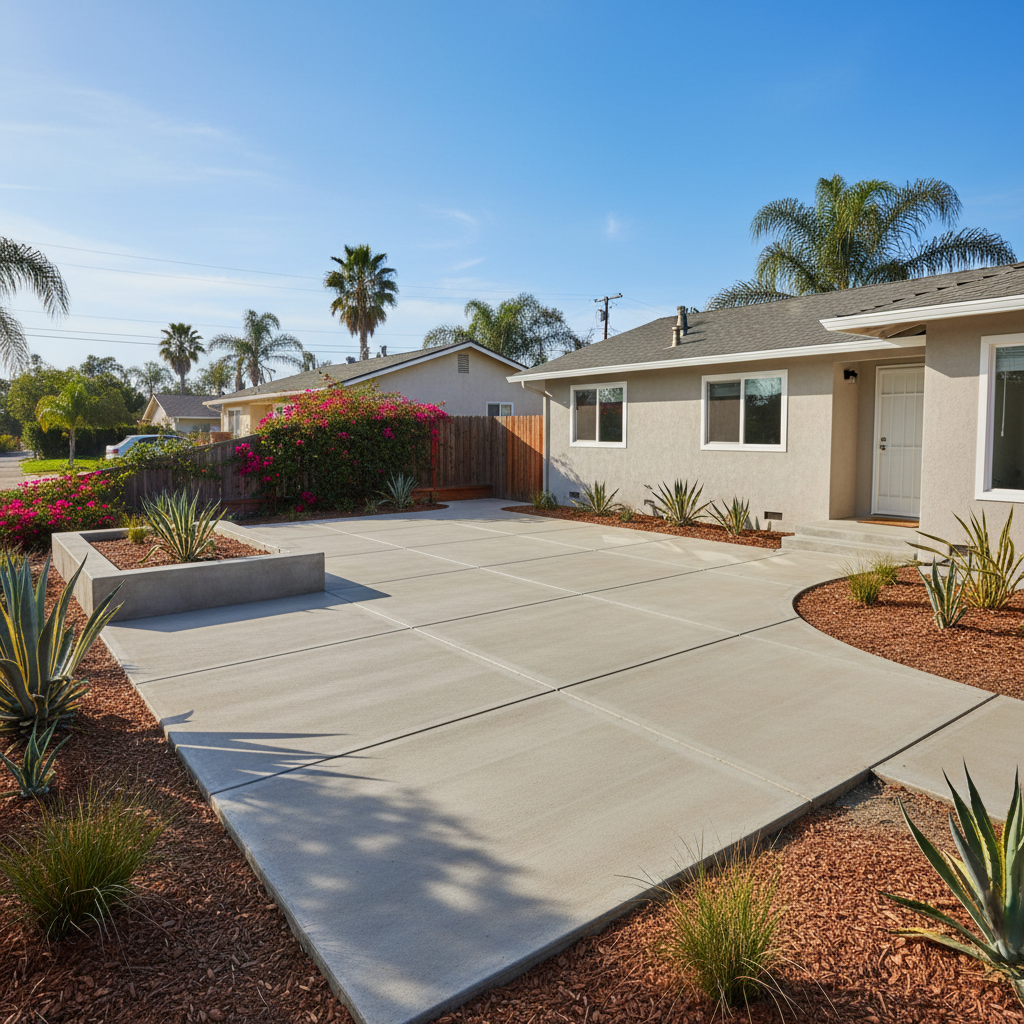
What Does New Concrete Really Cost in Ventura?
So, you're looking to pour some new concrete, huh? Maybe it's a patio, a driveway, or a new foundation for that ADU you've been dreaming about. One of the first questions I always get is, "What's this going to cost me?" It's a fair question, and honestly, it's not always a simple answer. But I can give you some real numbers and tell you what factors really push the price up or bring it down here in Ventura.
Forget those national averages you see online. Our local market, labor costs, and even the soil conditions around here – especially in places like the hills above the Pierpont area where you might hit more rock – all play a role. Generally, for standard broom-finish concrete, you're looking at anywhere from $10 to $20 per square foot. But that's just a starting point. Let's break it down.
What Makes the Price Tag Go Up or Down?
There are a few big things that swing the cost:
- The Type of Concrete Finish: Basic broom finish is the most affordable. Want something fancier?
- Stamped Concrete: This can easily add $5-$10 per square foot, sometimes more, depending on the pattern and colors. It's labor-intensive, and the materials for the stamps and release agents aren't cheap.
- Exposed Aggregate: This is a beautiful, durable finish. Expect to pay an extra $3-$7 per square foot over standard.
- Colored Concrete: Adding integral color usually tacks on $1-$3 per square foot.
- Site Preparation: This is huge. If we're just pouring on a clean, level, compacted base, it's straightforward. But if we have to demolish old concrete, haul away debris, or bring in a lot of fill dirt to level a sloped yard, those costs add up fast. Demolition and hauling can be $2-$5 per square foot on its own.
- Accessibility: Can we get our trucks and equipment right up to the pour site? If we have to wheelbarrow concrete a long distance or pump it over a house, that's extra labor and equipment rental, which means more money.
- Thickness and Reinforcement: A standard patio might be 4 inches thick with rebar or mesh. A driveway needs to be 4-6 inches, often with more robust rebar, especially if you're parking heavy vehicles. Foundations are even thicker and more reinforced. More concrete and more steel equals more cost.
- Permits and Engineering: For larger projects, especially foundations or anything structural, you'll need permits from the City of Ventura, and possibly engineering plans. These aren't cheap and can add thousands to the overall project.
What Should Be Included in Your Quote?
When you get a quote from Paradise Concrete Co. or any other reputable contractor, make sure it's detailed. It should clearly spell out:
- Square footage and thickness of the concrete.
- Type of finish (e.g., broom, stamped, exposed aggregate).
- Site prep work: demolition, grading, compaction.
- Materials: concrete, rebar/mesh, forms, any color or stamping materials.
- Labor costs for forming, pouring, finishing, and cleanup.
- Any additional services: hauling, pumping, saw cuts for control joints.
- Permit fees (if applicable, sometimes these are paid directly by the homeowner, but they should be noted).
- Insurance and Warranty information.
A good quote leaves no room for surprises. If it's just a single line item, walk away.
How to Avoid Overpaying for Concrete
Alright, so you don't want to get ripped off. Here's my advice:
- Get Multiple Bids: Don't just go with the first guy. Get at least three detailed quotes. This helps you compare apples to apples and understand the market rate for your specific project.
- Be Specific About What You Want: The more details you provide upfront, the more accurate the bids will be. Changing your mind halfway through is almost always going to cost you more.
- Check References and Licenses: Make sure the contractor is licensed (CSLB) and insured. Ask for references and actually call them. See their work.
- Don't Always Go for the Cheapest: The lowest bid often means corners are being cut – either on materials, labor, or proper site prep. You'll pay for it later in cracks, drainage issues, or an ugly finish. Quality concrete work is an investment.
- Understand the Payment Schedule: Reputable contractors won't ask for 50% or more upfront. A reasonable deposit (10% or a set amount like $1,000, whichever is less) is standard, with progress payments tied to milestones.
Doing your homework upfront will save you headaches and money in the long run. Good concrete work lasts for decades, so it's worth getting it done right the first time.