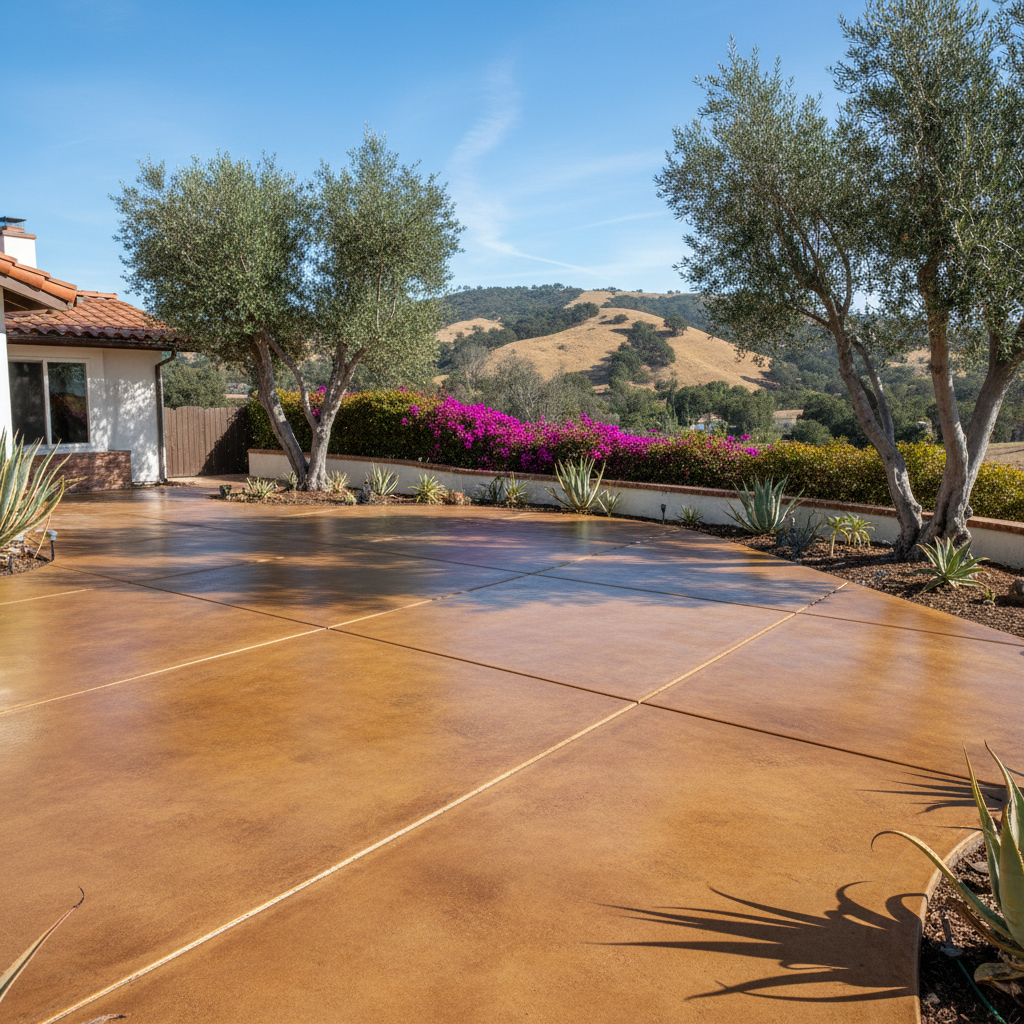
So, you've got some gorgeous stained concrete, maybe it's your patio, your garage floor, or even inside your home. It looks fantastic, right? That deep color, the unique marbling – it really adds a custom touch. But here's the deal: even the toughest materials need a little love to stay looking their best. Especially here in Ventura, with our coastal air and that occasional Santa Ana wind kicking up dust, you can't just set it and forget it.
Extending the Life of Your Stained Concrete
The biggest thing you can do to protect your stained concrete is to protect its sealer. The stain itself is permanent, it's actually changing the concrete's color. But the sealer? That's your sacrificial layer, taking all the abuse. Think of it like sunscreen for your concrete. If that sealer wears down, your stain starts to look dull, and the concrete underneath becomes more vulnerable to everything from spills to abrasion.
For exterior surfaces, especially those exposed to the sun and elements, I always recommend reapplying a good quality sealer every 2-5 years. For interior floors, you might get away with 5-10 years, depending on foot traffic. How do you know? If water stops beading up on the surface, or if the color starts to look faded, it's probably time. Don't wait until it's completely gone, or you'll be looking at a much bigger job than just a simple re-seal.
Also, use mats! Especially at entryways. Those little bits of sand and grit that get tracked in? They're like sandpaper on your sealer. A good mat catches a lot of that before it even gets a chance to scratch your beautiful floors.
Regular Maintenance: What You Need To Do
This isn't rocket science, folks. Most of your regular maintenance is just common sense cleaning. For interior floors, a simple dust mop or a soft-bristle broom is your best friend. For exterior patios, a leaf blower works wonders for getting rid of loose debris. When it comes to washing, less is more with harsh chemicals.
- Gentle Cleaning: For general cleaning, use a pH-neutral cleaner. You can find these at most hardware stores, or just use a little dish soap diluted in water. Don't use anything with ammonia, bleach, or harsh acids – those can strip the sealer or even etch the concrete itself.
- Mopping: For interior floors, a damp mop is usually all you need. Don't flood the floor. For exterior, a good rinse with a hose and a soft brush for any stubborn spots works great.
- Spills: Clean them up fast! Especially things like oil, red wine, or anything acidic. The longer they sit, the more likely they are to penetrate the sealer and potentially stain the concrete itself.
- Protect Furniture: If you've got heavy furniture or planters on your stained concrete, put felt pads under them. Moving them around without protection is a surefire way to scratch the surface.
We've done a lot of stained concrete work in places like the Pierpont area, where people have beautiful outdoor living spaces. Keeping up with this kind of routine cleaning really makes a difference in how long that vibrant look lasts, especially with the salt air we get.
Warning Signs of Problems
You're not just looking for dirt. Keep an eye out for these things, because they tell you something bigger might be going on:
- Dull Spots or Fading: This is the most common sign your sealer is wearing thin. If you see areas that look noticeably less vibrant or shiny than others, especially in high-traffic spots, it's time to think about re-sealing.
- Scratches or Abrasion Marks: Small scratches are normal over time, but if you're seeing deep gouges or widespread abrasion, your sealer isn't doing its job anymore.
- Peeling or Flaking Sealer: This usually means the sealer wasn't applied correctly in the first place, or it's just completely failed. You'll see little bits of the top layer coming off. This needs attention.
- Stains that Won't Come Out: If you've cleaned a spill promptly and it still left a mark, your concrete is no longer properly sealed.
- Moisture Issues: If you notice a white, powdery substance (efflorescence) appearing on your exterior concrete, or if interior concrete feels damp, you might have moisture coming up from underneath. This isn't usually a stain issue, but a bigger concrete problem that needs investigation.
When To Call a Professional
Look, I'm all for DIY, but some things are best left to the pros. You should definitely call someone like us at Paradise Concrete Co if:
- You see extensive peeling or delamination of the sealer. This often means the old sealer needs to be completely removed before a new one can be applied, which is a specialized process.
- You have stubborn stains that won't budge. We have industrial-strength cleaners and techniques that can often lift stains homeowners can't.
- You're ready for a complete re-seal, especially on a large or complex area. Getting an even, professional finish takes experience and the right equipment.
- You notice cracks or significant damage to the concrete itself. Stains and sealers won't fix structural issues.
- You're dealing with efflorescence or other moisture-related problems. These can be tricky to diagnose and fix properly.
Don't wait until your beautiful stained concrete is an eyesore. A little proactive care goes a long way, and knowing when to call in the cavalry will save you a headache and money in the long run.