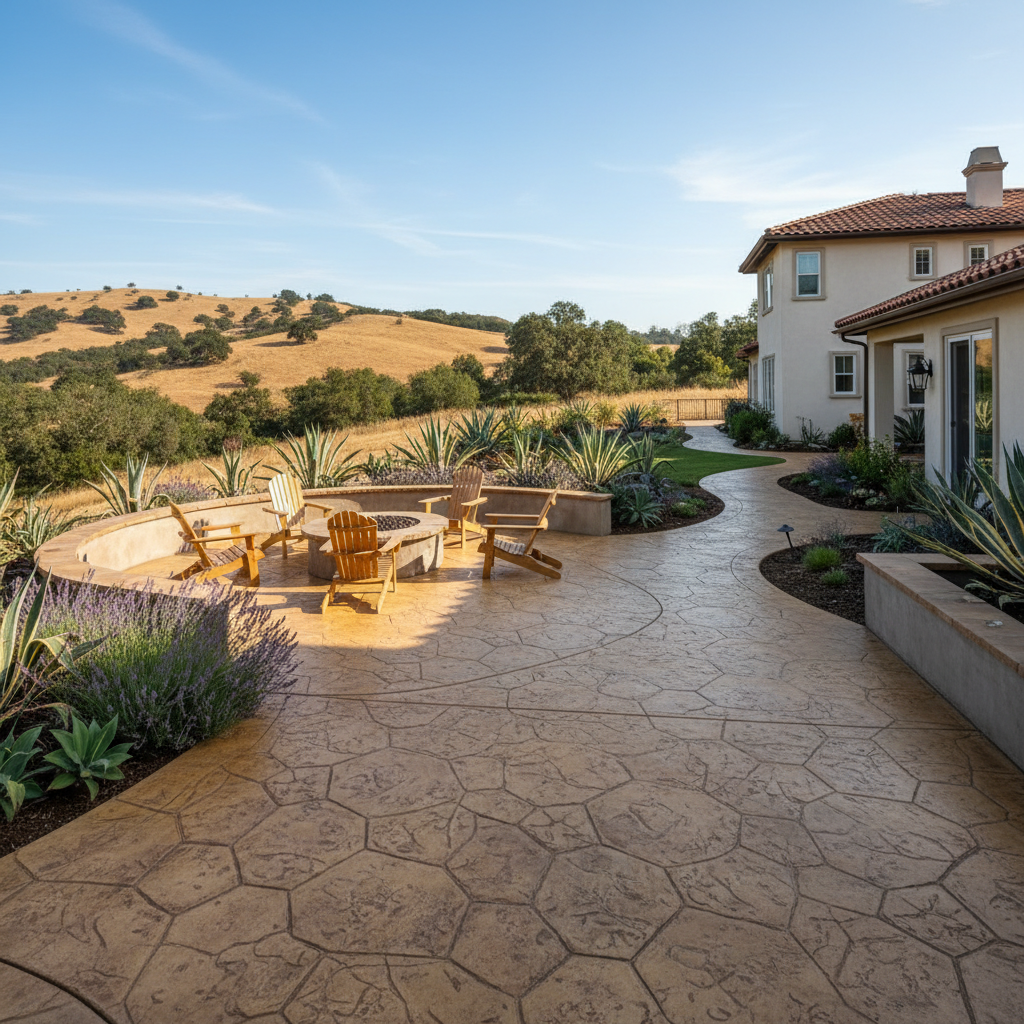
You want beautiful stamped concrete that lasts, right? Well, in Ventura, getting that perfect finish and long-term durability often comes down to one thing: timing. It's not just about when you're ready; it's about when the weather's ready.
Why Ventura's Climate Matters for Stamped Concrete
Our coastal climate here in Ventura is pretty mild compared to other places, but it definitely has its quirks. We get those marine layers, sometimes strong Santa Ana winds, and of course, our distinct wet and dry seasons. All of this plays a big part in how concrete cures, how it takes a stamp, and how well it seals.
When we pour concrete, it needs to cure properly. That's the chemical process where it hardens and gains strength. Too hot, too cold, too windy, too much moisture – all these things can really mess with that process. For stamped concrete, it's even more critical because we're working with the surface while it's still wet enough to impress a pattern, but firm enough to hold it. Tricky, huh?
The Best Time to Schedule Your Stamped Concrete Project
From my experience, the sweet spot for stamped concrete projects in Ventura is generally late spring through early fall. Think May, June, September, and early October. Why then?
- Consistent Temperatures: We usually get nice, steady temperatures in the 60s and 70s. This lets the concrete cure at a steady rate, which is ideal for strength and durability.
- Lower Humidity: While we get our morning fog, the overall humidity tends to be lower than in winter. That really helps with the drying and sealing process.
- Less Rain Risk: You absolutely do not want rain on fresh concrete, especially stamped concrete that's still setting. Our dry season significantly reduces that risk, meaning fewer delays and better results.
That said, we've done successful jobs outside these months, but it requires more careful planning and sometimes adjusting the concrete mix or working hours. For instance, pouring in December when it's cooler and we have those heavy morning dews means we have to be extra vigilant about moisture and curing blankets.
Weather Conditions That Affect the Work
It's not just the season; it's the daily conditions. Here's what we're always watching:
- High Heat: If it's too hot, especially those occasional 90+ degree days we get inland from the coast, concrete can dry too quickly. This can lead to cracking, make it harder to stamp properly, and reduce its overall strength. We might have to add retarders to the mix or work very early in the morning.
- Strong Winds: Those Santa Ana winds we sometimes get are a concrete contractor's bane. They can wick moisture out of the concrete surface way too fast, causing plastic shrinkage cracking before it even has a chance to set. We'll often put up windbreaks or use special curing compounds to combat this.
- Rain: Obvious, but worth stating. Rain on fresh concrete can wash out the cement paste, weaken the surface, and ruin the stamped pattern. If rain is in the forecast, we're rescheduling. No exceptions.
- Low Temperatures: While less common here, if temperatures drop too low (below 40°F), concrete cures very slowly or not at all, which can compromise its strength. We'd have to use accelerators or protect the pour with blankets and heaters.
At Paradise Concrete Co., we're always checking the forecast and adjusting our plans to make sure your project gets the best possible conditions. We're not just pouring concrete; we're managing the environment around it.
Protecting Your Stamped Concrete Investment Year-Round
Once your stamped concrete is in, you want to keep it looking great. Here's how:
- Regular Cleaning: Sweep or hose it off regularly to remove dirt, leaves, and debris. For tougher stains, a mild detergent and a brush can do wonders. Avoid harsh chemicals or pressure washers that are too strong, as they can damage the sealer.
- Re-sealing: This is probably the most important maintenance step. The sealer protects your concrete from moisture, UV rays, and abrasion. In Ventura, with our sun exposure and occasional dampness, I recommend re-sealing every 2-3 years, or sooner if you notice the finish dulling or water no longer beading up. It's like sunscreen for your concrete.
- Watch for Cracks: While we do everything to prevent them, concrete can crack. If you see small hairline cracks, don't panic. They're often superficial. But if you see larger, expanding cracks, or areas that are spalling (flaking), it's a good idea to give us a call.
- Protect from Heavy Loads: Try not to drive heavy machinery or park very heavy vehicles on residential stamped concrete if it wasn't designed for that load.
- Avoid De-icers: Not a huge concern in Ventura, but if you ever use de-icing salts, know they can damage concrete surfaces. Stick to sand if you absolutely need traction on a rare frosty morning.
Taking care of your stamped concrete isn't rocket science, but a little attention goes a long way in preserving its beauty and extending its life. We're always here if you have questions or need a hand with maintenance.