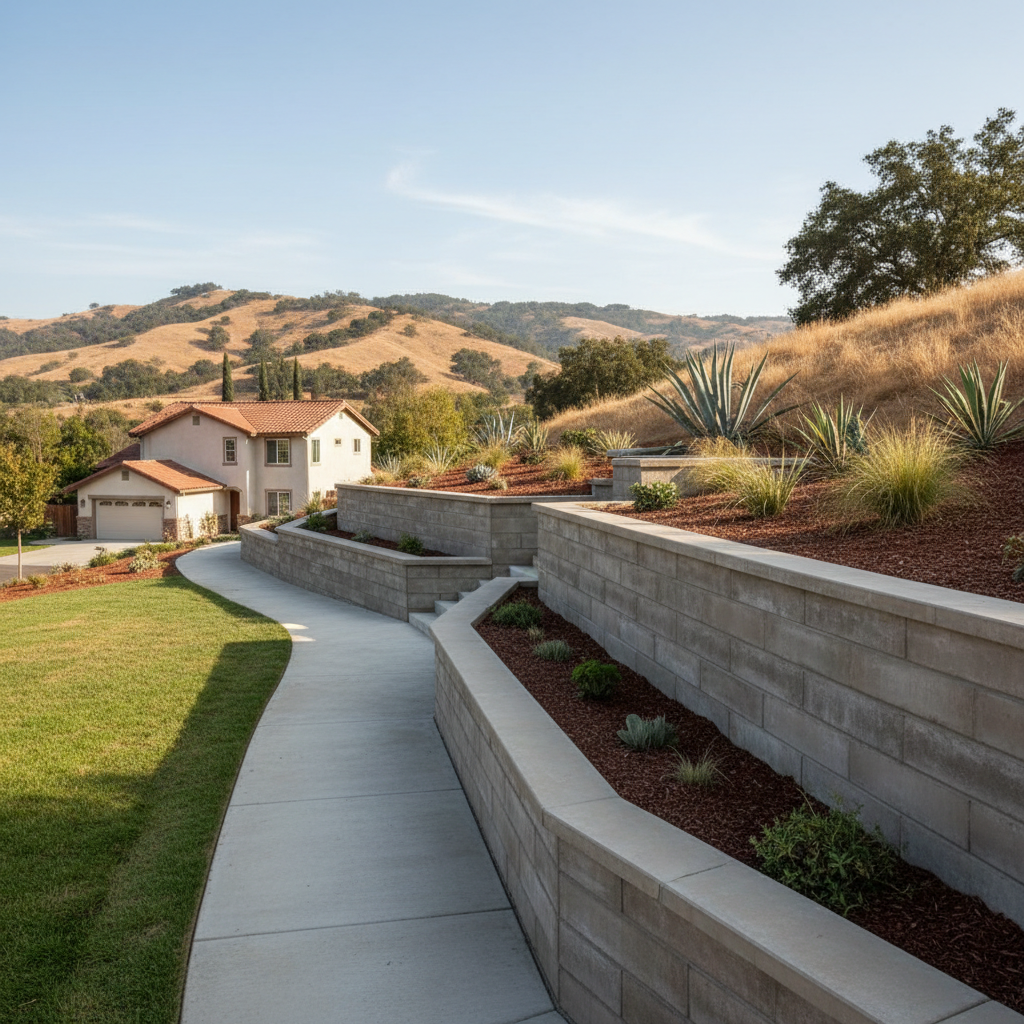
So, you're thinking about putting in a concrete retaining wall. Maybe your yard's sloped and washing out, or you just want to carve out some usable, level space. Good call, by the way. A well-built concrete retaining wall isn't just practical; it can really boost your property's curb appeal and value. But let's be honest, it's not a small job, and you definitely want it done right. Here's what you need to know before you even pick up the phone.
Understanding the Timeline: It's Not an Overnight Job
Let's be real, concrete work takes time. We're not just pouring a slab for a shed here. For a retaining wall, especially one that's going to hold back a lot of earth, there are several stages, and each one needs its own time to breathe.
- Initial Chat & Design (1-3 weeks): This is where we figure out what you need, what's actually possible, and what the local codes say. We'll check out your property, talk drainage, and discuss the wall's height and length. Sometimes, for taller walls or those near property lines, we might even bring in a structural engineer.
- Permitting (4-12 weeks, sometimes longer): This is often the longest part of the whole process, and frankly, it's mostly out of our hands. Ventura County and the City of Ventura each have their own hoops to jump through. You'll need permits for anything structural, and a retaining wall absolutely counts. Don't even think about skipping this step; it'll come back to bite you later.
- Material Orders & Scheduling (1-3 weeks): Once those permits are finally in hand, we can lock in materials and get you on our calendar. Good contractors are usually pretty busy, so there might be a bit of a wait.
- Construction (2-6 weeks, depending on size): This is the actual build. It involves digging, pouring the footing, setting rebar, building forms, pouring the concrete, and then letting it cure. We'll need good weather for pouring, which is usually no problem here in Ventura, but rain can definitely throw a wrench in things.
So, from start to finish, you're probably looking at a 3-6 month process, minimum. Don't let anyone tell you it'll be done in a month. They're either cutting corners or they're just not being straight with you.
What to Expect During the Process
Once we get going, your yard's going to look like a construction zone for a bit. There's just no way around it. We'll be digging, moving dirt, and making some noise. Here's a quick rundown:
- Excavation: We'll dig out the trench for the footing and shape the area where the wall will go. This can get pretty messy.
- Footing Prep & Pour: This is the base of your wall — absolutely critical. We'll lay down rebar, build forms, and pour the concrete.
- Wall Forms & Rebar: After the footing cures, we'll set up the forms for the wall itself and install the vertical rebar. This is what gives the wall its strength, you see.
- Concrete Pour: The big day! Concrete trucks, pumps, and a crew working to get it all placed correctly.
- Curing & Finishing: The concrete needs time to gain strength. We'll also be working on any finishes you've chosen, like stamping or staining.
- Backfilling & Drainage: This part is huge. We'll install proper drainage behind the wall (gravel, drain pipe) to prevent hydrostatic pressure from building up, which can destroy a wall over time. Then we'll backfill the area.
We'll try to keep things as tidy as possible, but expect some disruption. Your pets might need to be kept inside, and kids should definitely stay clear of the work area.
How to Prepare Your Property (and Yourself)
A little prep on your end can make a big difference, honestly. First, clear the area. Move any patio furniture, potted plants, or anything else that's in the way. If you have irrigation lines or low-voltage lighting in the work zone, please let us know so we don't accidentally cut them. Mark them if you can. Also, think about access. Can a concrete truck get close enough? Do we have space for equipment? Sometimes we have to get creative, especially in tight older neighborhoods like those up in the Ventura Hills.
Mentally prepare for the timeline and the mess. It's going to be worth it in the end, but the journey can be a bit dusty. Keep good communication with your contractor. If you have questions, ask them!
Crucial Questions Before You Sign a Contract
This is where you protect yourself. Don't just go with the cheapest bid; that's rarely a good idea. Ask these questions:
- Are you licensed and insured? Get proof. My license is C-8, and Paradise Concrete Co. is fully insured. Don't work with anyone who isn't, period.
- Can you provide references? Call them. Ask about communication, timeliness, and if they'd hire the contractor again.
- Who pulls the permits? It should be the contractor. They know the process inside and out.
- What's your process for drainage behind the wall? This isn't optional. A good contractor will have a clear plan for gravel, weep holes, and a drain pipe.
- What's included in the price? Get a detailed breakdown. Does it include excavation, rebar, concrete, forms, labor, cleanup, and any finishes? What about engineering plans or permit fees?
- What's the payment schedule? A reputable contractor won't ask for 50% or more upfront. Usually, it's a deposit, progress payments, and a final payment upon completion.
- What's your warranty? Get it in writing.
- How do you handle changes or unforeseen issues? There's always a chance something unexpected comes up. You want to know how they communicate and charge for changes.
Choosing the right contractor is just as important as the wall itself. Take your time, do your homework, and you'll end up with a beautiful, functional retaining wall that lasts for decades.