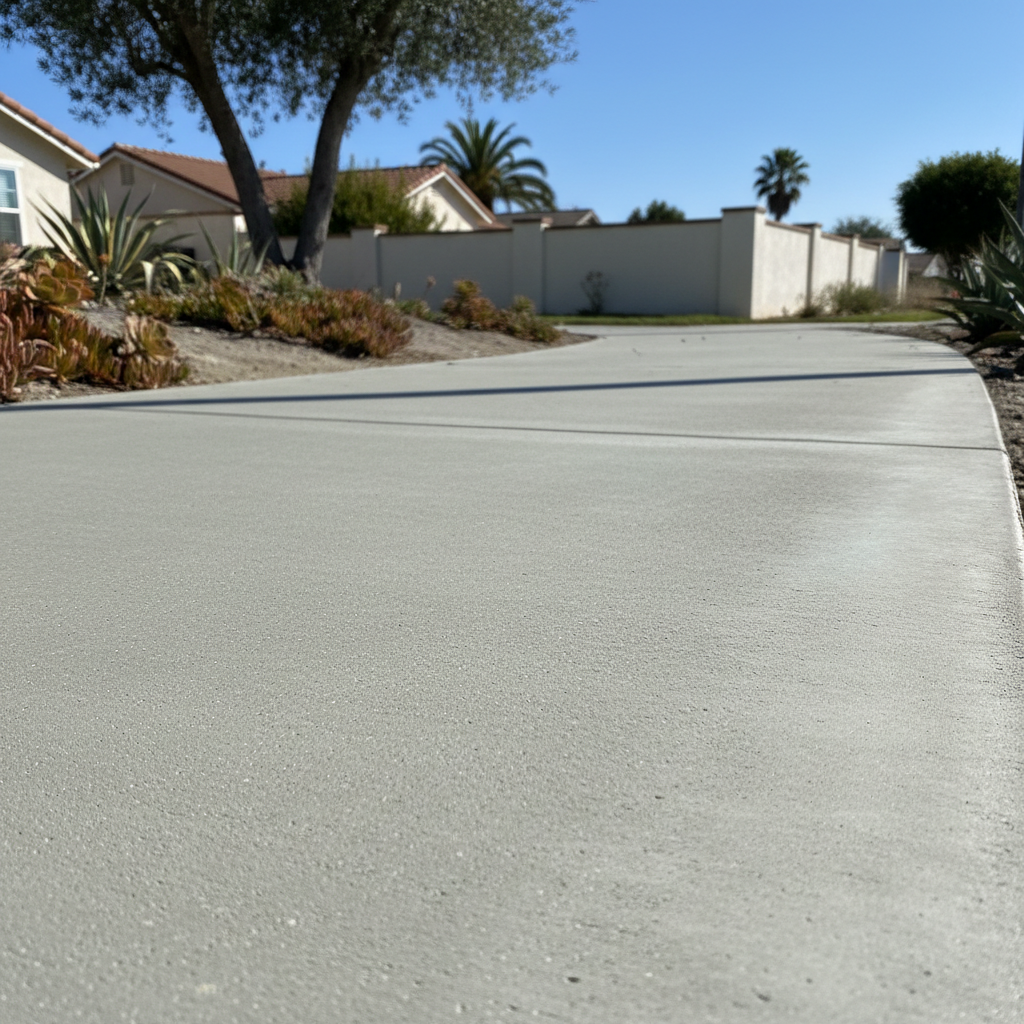
Ever look at the concrete strip out front and wonder who actually owns it, or why it is buckling up near your driveway? Over the years at Paradise Concrete Co, we have heard just about every question a homeowner can ask us regarding public and private walkways. Coastal weather, shifting clay soils, and massive neighborhood ficus trees all play a role in how concrete behaves around here. Paradise Concrete Co answers the most common questions we get asked right here in Ventura.
Am I really responsible for the sidewalk in front of my house?
This is the question that catches most new homeowners off guard. Yes, under California law and local municipal codes, the property owner is generally responsible for maintaining the sidewalk adjacent to their property. Even though it sits in the public right-of-way, fixing trip hazards and structural breaks falls on you. If someone trips on a broken slab on your frontage, liability often points back to the homeowner. Ignoring a crumbling path is not a great long-term strategy for homeowners in Ventura.
What causes sidewalks to lift and crack so badly around here?
Paradise Concrete Co sees two main culprits in Ventura: aggressive street tree roots and our local expansive soils. When the ground dries out during long dry spells, the earth shrinks. When we get sudden downpours, the soil swells up. That constant movement puts massive stress on rigid concrete. Add in mature street trees planted in tight parkways, and those roots will push sidewalk panels up several inches in no time, creating nasty tripping hazards across Ventura.
Can I just grind down a lifted sidewalk panel or do I need to replace it?
It depends on the height of the lip. For minor offsets under an inch and a half, concrete grinding or shaving is sometimes an option that the city or private contractors use to eliminate a trip hazard quickly. But if the panel is severely cracked, shattered into multiple pieces, or sinking into a void, grinding is just a temporary fix. Once the structural integrity of the slab is gone, pouring a fresh, properly reinforced section of Sidewalk Replacement is the only way to fix it right in Ventura.
Do I need a permit from the city to replace my sidewalk?
If you live within Ventura city limits and the work touches the public right-of-way, an encroachment permit is typically required. The good news is that the city usually waives the permit fee for standard sidewalk repairs, but they do want to inspect the setup to ensure it meets ADA compliance, grade requirements, and proper thickness standards. If you hire a licensed contractor, they should handle pulling this paperwork for your Sidewalk Installation project.
How thick should a residential sidewalk be poured?
A standard residential Sidewalk should be at least four inches thick. If you have a section that crosses a residential driveway apron where cars are rolling over it daily, Paradise Concrete Co always bumps that up to six inches minimum and includes heavy-duty reinforcing mesh or rebar. Skimping on thickness or subgrade compaction is the number one reason we get called out to replace Sidewalks in Ventura that cracked within their first couple of years.
How long do I have to keep people off a fresh concrete pour?
You will want to keep foot traffic off the new Sidewalk for at least 24 to 48 hours, and keep cars and heavy loads away for a full week. Ventura coastal marine layer can sometimes slow down the initial cure time by keeping the air damp, which is actually great for concrete strength, but you still need to protect the surface from stray pets, kids, and rogue bike riders until the Concrete Pour fully sets up in Ventura.